Glioblastoma is a devastating primary brain cancer, with average survival below 18 months, near-universal rates of tumour recurrence, and standard-of-care treatment regimes that haven’t changed in 20 years.
We believe that glioblastoma’s profound epigenetic heterogeneity is the key to understanding its behaviour and to unlocking new therapeutic strategies.
We combine single-cell epigenomics, computational biology and advanced patient-derived models to understand how different tumour cell states emerge, respond to treatment and evolve over time. Ultimately, we aim to translate this understanding into new approaches for treating individual patients.
Research theme 1: Epigenetic evolution
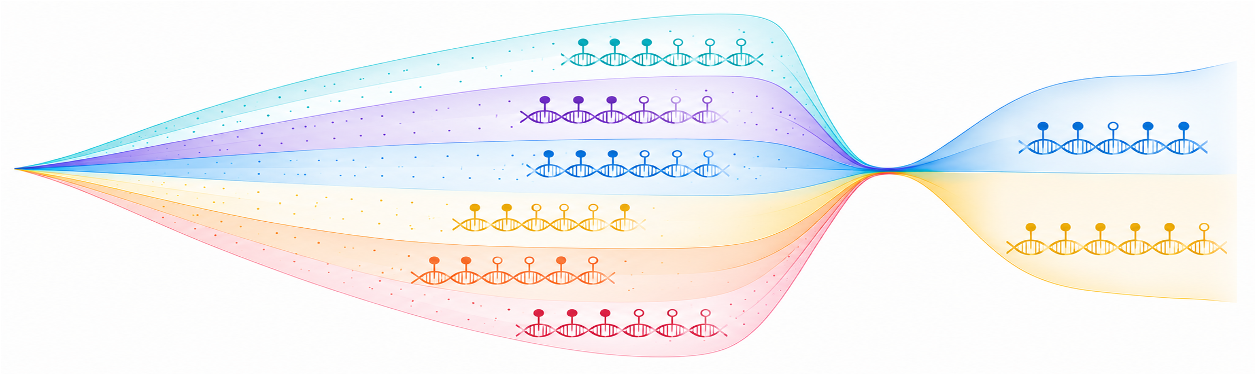
Glioblastomas are not static diseases. They contain diverse populations of tumour cells that can occupy distinct epigenetic and transcriptional states, providing a reservoir of variation upon which therapy can act.
We investigate how this non-genetic diversity is generated, maintained and selected during tumour evolution, with a particular focus on the transition from primary to recurrent disease. By resolving these processes at single-cell resolution, we aim to understand how epigenetic heterogeneity contributes to treatment resistance and tumour recurrence.
Research theme 2: Combinatorial precision medicine
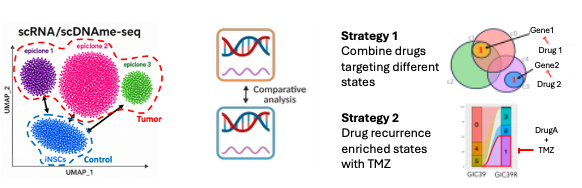
The same heterogeneity that enables glioblastoma to evade treatment may also create state-specific therapeutic vulnerabilities.
We seek to identify these vulnerabilities and understand how tumour cells adapt when they are therapeutically perturbed. By combining molecular profiling with patient-derived experimental models, we aim to develop rational combination therapies that anticipate and exploit tumour cell plasticity, rather than allowing it to drive treatment resistance.
Our long-term goal is to develop approaches in which the molecular and epigenetic composition of an individual tumour can inform which therapies — and which combinations — are most likely to control it.
Interested in our work?
Reach out to discuss new opportunities for collaboration or enquire about joining the team